

01
In Sessions
ERP with a clinician present means short, repeated exposures, then sitting with the urge without performing the ritual. We build up gradually, so your teen starts at a pace that feels manageable on day one.
Intrusive thoughts, and the rituals that quiet them for about a minute, can take over a teen's day. We use daily exposure and response prevention in a home-like house in Southern California for ages 12 to 17, paced so your teen's first day feels manageable.


What this is
Obsessive-compulsive disorder is not a personality quirk or a tidy desk. In teenagers it can mean hours lost to checking, washing, repeating, or a mental ritual that has to feel exactly right. The unwanted thoughts are often disturbing ones about harm, contamination, or morality that your teen would never choose to have. We treat that cycle in a full residential day, so your teen practices every day instead of in a single weekly hour that the ritual can outlast.
Signs of OCD families usually notice
Washing, checking the lock, or rewriting the same sentence can turn the morning into a negotiation. Over time, school can stop happening at all.
Thoughts about harm, contamination, sex, or religion can feel both alien and true to a teen. Shame often keeps them out of therapy, even though therapy is where they can be talked about safely.
Did I lock it? Are you sure I am not sick? Your answer may help for a minute, then the question returns, and you can find yourself part of the cycle.
Many parents wash, check, drive the longer route, or answer the same question again, because it keeps tonight calm even though it can make tomorrow harder.
No public bathrooms, certain foods off the list, a friend no longer seen. Your teen's world can quietly shrink so the fear never has to be faced.
Mental reviewing, counting, or praying a set number of times are invisible from the outside, and they can be just as tiring as the visible ones.
Daily life
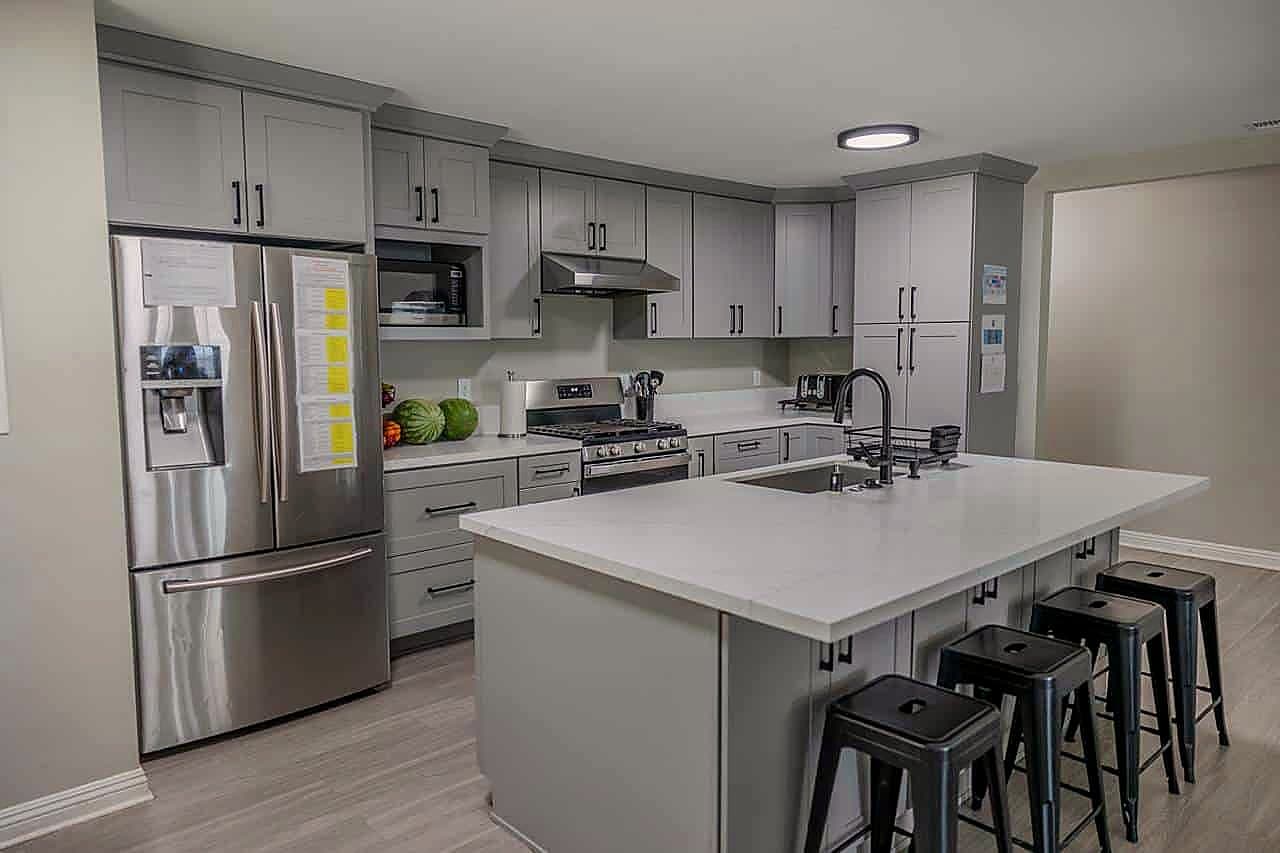
Therapy sessions, the kitchen, and the house itself all offer chances to practice. The same urge can come up in all three places, and in each one your teen works on not performing the ritual.
01
ERP with a clinician present means short, repeated exposures, then sitting with the urge without performing the ritual. We build up gradually, so your teen starts at a pace that feels manageable on day one.
02
Parents learn how to stop answering the same question and what to say instead. We write a plan for the first weekend home, when the bathroom and the front door lock come back into daily life.

03
The day itself is the practice, from meals to hallways to shared bathrooms. Our staff can tell which urge is OCD and which is ordinary teenage behavior, and the daily schedule stays steady instead of changing around the rituals.
Our approach
We start with ERP, then work on the beliefs underneath it, then help your family step back from accommodating. Each part is chosen for your teen.
Your teen faces the trigger, does not perform the ritual, and stays with it until the urge eases. Daily ERP is a core part of OCD treatment here.
CBT looks at the belief that having a thought makes you responsible for it, and that feeling in danger counts as evidence. We do not try to argue the thought away.
The anxiety that follows an exposure needs a way down that is not a compulsion. We help your teen learn skills they can use on their own, without a therapist in the room.
Sitting with other teens who have the same kind of intrusive thoughts can break the isolation, and saying it out loud is itself part of the treatment.
For some teens with severe OCD, medication can help ERP feel possible. We consult psychiatry when the team recommends it, and we do not lead with a prescription.
Your part
OCD can pull the whole household into the rituals. Family work here helps you step out of that cycle with our team beside you, and it goes well beyond Sunday visits.
Answer the question again.
Answering helps for a minute, then the question comes back. We teach you what to say instead, and how to sit through the hard minute without fixing it.
Do the ritual for them.
Stopping all accommodation at once can be too much for many teens. We reduce it in planned steps with you in the room, so nothing comes as a surprise after discharge.
Let the lock and the sink win at home.
A written plan for the lock, the sink, and the car gets practiced the weekend before discharge. You and your teen walk in with a plan instead of improvising once you are home.
Academics
When a morning ritual runs two hours long, first period can be gone before the day starts. OCD treatment here happens alongside accredited school, not instead of it.
Classes Matched To Your Teen
Classes run through Advantages School, our accredited school partner. We use your teen's transcript and current schedule to place them in the right courses, helping protect their credits while ERP happens the same day.
Optional Tutoring
Tutoring is available alongside the clinical day, giving your teen extra support with classes. We do not wait for a ritual-free morning before your teen attends their first class.
Preparing For The Return To School
Before discharge, we help your teen practice the locker, the school bathroom, and the first class. Going back then feels more familiar and less like a new set of triggers.
Please send your teen's transcript, current schedule, and any IEP or 504 plan.
Length of stay
30
days in residence, by progress
Most stays run 60 to 90 days. Some finish closer to 30, and a few need longer.
90
Milder OCD may belong in weekly outpatient ERP. When rituals have taken your teen's mornings, hours of their day, and your family's peace, a one to three month stay can give exposure work the repetition it needs. Discharge is planned around real progress and a next treatment team.
When to call
If OCD is taking hours of your teen's day, their schooling, or your family's peace, or if you have become part of the rituals, we're here to help. Aaron Earnest and the admissions team will be upfront about whether this level of care fits. If the pattern is closer to general panic than to rituals, our residential treatment for teen anxiety page may be a better match.
Before you call
FAQ
Answers to what parents often ask before calling about OCD treatment for teens. If your question is not here, admissions can talk it through with you.
In exposure and response prevention, your teen faces the trigger, does not perform the ritual, and stays with it until the urge eases. A clinician is present, and we build up gradually from a pace that feels manageable on day one.
Most teens finish in one to three months, and some stay longer. We do not discharge on a schedule, so each stay follows your teen's progress with the rituals.
Many parents wash, check, or answer the same question again, because it keeps tonight calm. We teach you what to say instead and reduce that help in planned steps, with you in the room.
For some teens with severe OCD, medication can help ERP feel possible. We consult psychiatry when the team recommends it, and we do not lead with a prescription.
Milder OCD may belong in weekly outpatient ERP, and Aaron Earnest and the admissions team will be upfront about whether this level of care fits. If the pattern is closer to general panic than to rituals, our residential treatment for teen anxiety page may be a better match.