
01
In Sessions
We start with short exposure exercises, then practice them in real situations, like walking a hallway or making a phone call. The pace is built so your teen's first day feels manageable.
Families often call us when panic has started to affect their teen's school, sleep, and most weekends. We offer a home-like residential program in Southern California for ages 12 to 17, with exposure therapy every day and school on site. The first day is paced so it feels manageable for your teen.
Clinically reviewed by Alejandro Alva, M.D., Medical Director.


What this is
Some worry is simply part of a hard week at school. Residential treatment can make sense when panic has already cost your teen the classroom, the car, and most of Sunday night. We treat the whole pattern in our live-in program, with your family included. Our program is not meant for a teenager who is simply shy.
Signs of an anxiety disorder
A racing heart, shortness of breath, and the urge to leave a class or a car can all arrive before your teen has a chance to name what set it off.
School, the freeway, a meal out, or a friend's house may quietly drop off the calendar, because skipping them can feel like the only thing that makes the fear stop.
Telling your teen it will be fine may help for about a minute. Then the question comes back, and you can become the only person who is able to calm them down.
Your teen may still be running through worries at midnight, which makes the next morning harder to get through. Many families find the whole house adjusts around the bad nights.
Stomachaches, headaches, and a startle response that does not match the situation can keep appearing, because the fear often lives in the body as much as in the head.
One question can lead to another, and a look or a grade may get replayed all night. The evening can disappear into solving a problem that has not happened.
Daily life
Therapy sessions, the kitchen table, and a hallway your teen has been skipping. The same fear gets treated in all three places, with steady practice each day.
01
We start with short exposure exercises, then practice them in real situations, like walking a hallway or making a phone call. The pace is built so your teen's first day feels manageable.
02
Parents learn what to say instead of "it will be fine," and how to stop the household from rearranging itself around your teen's fear, so your family can grow together.

03
Our staff recognize when avoiding something is the anxiety talking. The daily schedule stays steady, even around the places your teen would like to skip.
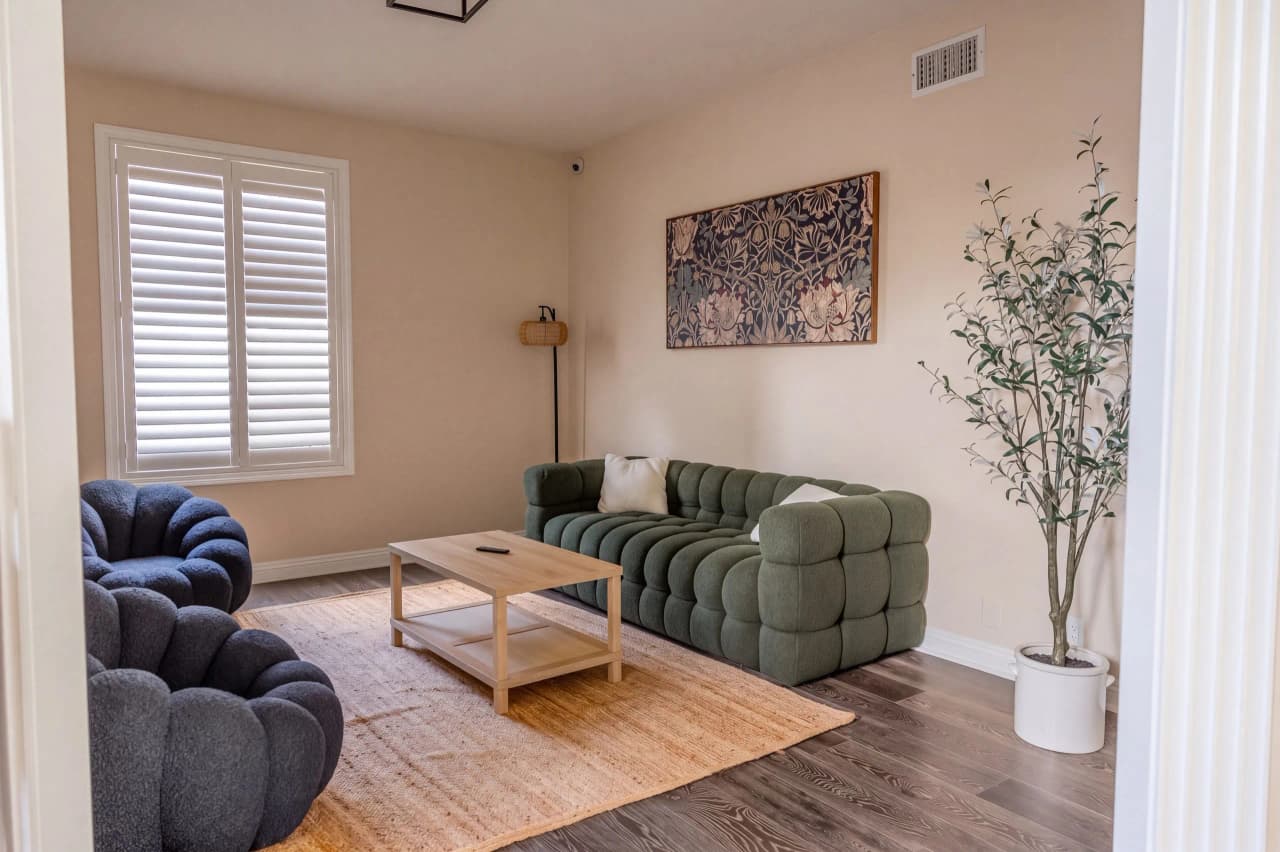
Ridgeview is our boys' house in Orange County, with six beds for teens ages 12 to 17. Staff are in the house overnight, and the clinical team is the same one that works in our other two houses.
You can also walk through Shasta and Richards, our other two houses.
Our approach
We begin with paced exposure, then work on the thinking underneath it, then help your household step away from running on reassurance.
Your teen faces a situation they have been avoiding, stays with it until the fear drops, and repeats it the next day. That kind of practice is hard to fit into one hour a week.
CBT helps your teen catch the thought that treats a feeling as proof, question it, and choose a next step small enough to actually attempt.
Panic needs a response other than escape. We help your teen practice one they can use on their own, even when no therapist is standing next to them.
Sitting with other teens who have had the same panic attacks can ease the isolation that often makes anxiety worse.
Medication can lower the intensity enough that exposure work becomes possible for some teens. We consult psychiatry, and we do not lead with a prescription.
Your part
Anxiety can pull the whole family into helping your teen avoid things. Family therapy here teaches you how to step out of that pattern, with you in the room and not waiting until Sunday.
You'll be fine.
Reassurance may calm your teen for a minute before the question returns. We teach you a response that does not give the anxiety another hour.
Skip the store if it helps.
Letting your teen skip something keeps tonight calm and can make tomorrow harder. We remove those workarounds in steps, with you in the room.
We'll handle school when they're ready.
The grocery store, the bedroom, and Sunday night each get a written plan here, so your family feels prepared before the first weekend at home.
Academics
By the time families call, first period is often the class their teen has stopped attending. School runs on site here, so returning to a classroom is something your teen can practice before a real school morning asks it of them.
Practicing The Return To School
Exposure work includes the bell, the locker, and the crowded hallway. The first morning back is practiced here rather than improvised there.
Classes Matched To Your Teen
Classes run through Advantages School, our accredited school partner. We use your teen's transcript and current schedule to place them in the right courses, helping protect their credits and their place in class.
Optional Tutoring Alongside Therapy
We do not wait for an anxiety-free morning before starting class. Optional tutoring runs right next to the therapy hour your teen may prefer to skip.
Please send your teen's transcript, current schedule, and any IEP or 504 plan.
Length of stay
30
days in residence, by progress
Most stays run 60 to 90 days. Some finish closer to 30, and a few need longer.
90
Weekly therapy may be enough for milder worry. This program can fit when avoidance has already cost your teen school, sleep, and weekends. A 30 to 90 day stay gives coping skills enough repetition to still work once your teen is home, and outpatient treatment can be the step after this one.
When to call
If panic, school refusal, or constant reassurance-seeking is taking over your household, we're here to help. Aaron Earnest and the admissions team will be upfront about whether this is the right level of care for ages 12-17. If the pattern looks closer to rituals than worry, teen OCD treatment may be the better fit. Psychiatry joins the plan when the clinical team recommends it.
Before you call
FAQ
Answers to what parents often ask before calling about residential care for anxiety. If your question is not here, admissions can talk it through with you.
Most stays run 60 to 90 days, and some finish closer to 30 while a few need longer. Discharge is based on your teen's progress, not on a set date.
Your teen practices short exposure exercises each day, then repeats them in real situations like walking a hallway or making a phone call. CBT, group therapy, and school on site fill the rest of the schedule.
Yes. Classes run through Advantages School, our accredited school partner, and we use your teen's transcript and current schedule to place them in the right courses. Optional tutoring runs alongside therapy.
Parents join family therapy and learn what to say during a panic attack, how to ease out of avoidance together, and how to plan the first weekend home before it arrives.
That depends on your teen. For some teens, medication lowers the intensity enough that exposure work becomes possible, so we consult psychiatry when the team recommends it and do not lead with a prescription.
This page is reviewed by Alejandro Alva, M.D., our Medical Director. These free guides from public health agencies and medical groups cover the topic in more depth.
National Institute of Mental Health
National Institute of Mental Health
MedlinePlus, National Library of Medicine