

01
In Sessions
We start with grounding skills and a predictable hour. We do not open up a memory in week one to prove your teen is making progress.
A car accident, an assault, or years in an unsafe home can leave a teenager easily startled and unable to sleep. Our home-like residential program in Southern California is for ages 12 to 17. We build stability first and do not ask anyone to talk about what happened until they feel ready.


What this is
Trauma in a teenager is not always one night with a clear name attached. Residential treatment can fit when a car accident, an assault, or years in an unsafe home still shape the week. You may see a startle response, numbness, or a school your teen will not walk into. We build stability first, and we never treat a teen as though they should be over it by now.
Signs of untreated trauma
A smell, a tone of voice, or a particular hallway can bring the whole event back. Flashbacks and nightmares can feel real long after the danger has passed.
Jumpiness, scanning every room, and a body that cannot sit still can make rest feel unsafe, and the household may gradually learn to move quietly around your teen.
People, places, and conversations may get dropped one at a time, so your teen's day has fewer parts and the memory stays unmentioned.
Shutting down and spacing out, or anger that seems to come from nowhere, can both be signs of the same nervous system trying to cope with the same thing.
A classroom your teen will not sit in and an adult they find hard to trust often show up at the same time. Authority itself can feel like a threat.
Nightmares, a light left on, and a teenager who will not sleep in their own room can mean the night is where the hardest part still happens.
Daily life
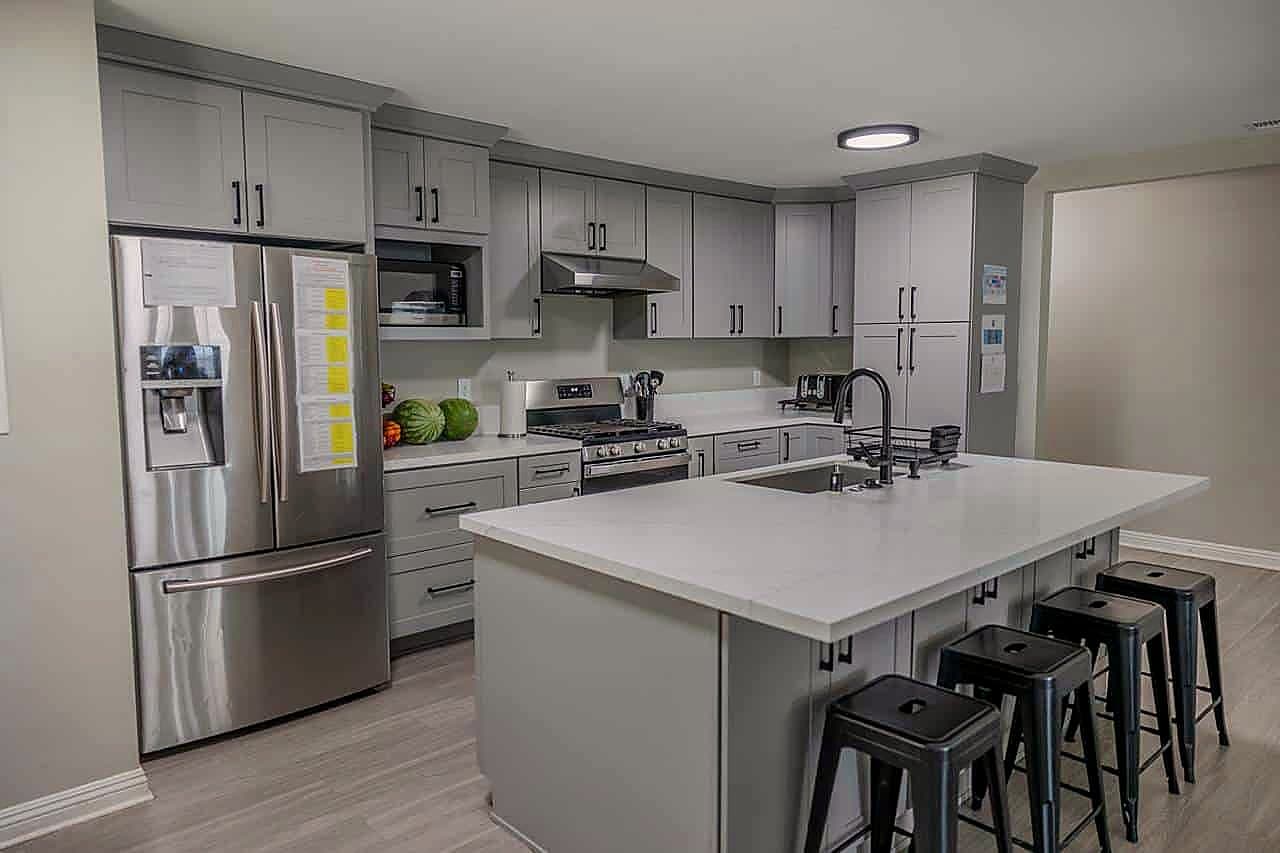
A quiet therapy hour, a kitchen that does not demand explanations, and a house that stays predictable between sessions all give your teen steady ground to stand on.
01
We start with grounding skills and a predictable hour. We do not open up a memory in week one to prove your teen is making progress.
02
Parents learn to tell a trauma trigger from ordinary teenage behavior, and how to sit with a hard moment without turning it into an interview.

03
A staffed, predictable day gives an overloaded nervous system somewhere to settle, and nothing here is designed to catch your teen off guard.
Our approach
We start with stability, then choose the method that fits, and we do not pull a memory open on day three to show progress.
Sleep, safety, and grounding skills come first. We do not open up a traumatic memory until your teen has the tools to handle what follows.
Understanding that the startle and the shutdown are physical reactions and not character flaws can take a lot of shame off a teenager.
When your teen can get through a difficult hour, we work on the beliefs the event left behind and approach what they have been avoiding at a manageable pace.
Distress tolerance and grounding need to work in the middle of the night with no therapist present, so your teen can use them at home too.
Medication may help with sleep or panic that is hard to settle. We consult psychiatry when the team recommends it, and we do not use medication in place of therapy.
Your part
Trauma can make a household careful about what is said out loud. Family therapy here is about making home feel safer for your teen, not about getting them to tell the story on your timeline.
Just tell me what happened.
Pushing for the story too soon can shut a teen down. We teach you how to sit with the jumpiness and the refusal, so dinner can stay a calm time together.
They're safe now, so drop it.
The danger may be over while your teen's body has not caught up. Family sessions teach you to respond to the reaction instead of arguing with it.
We'll talk after they come home.
Known triggers, the bedroom, and a difficult Sunday all get a written plan here. The first trip home is then not the first time anyone has thought about it.
Academics
What happened has often already cost your teen weeks of class. Classes continue on site while we do the slower work of helping your teen feel steady.
Classes Matched To Your Teen
Classes run through Advantages School, our accredited school partner. We use your teen's transcript and current schedule to place them in the right courses, helping protect their credits and their place in class throughout the stay.
A Gentle Start To The School Day
Optional tutoring is available alongside the clinical day. We do not wait for a calm therapy session before your teen attends a class.
A Return That Feels Familiar
Before discharge, we practice the hallway and the first class. Going back to a busy campus then feels less like a surprise after months in a quiet house.
Please send your teen's transcript, current schedule, and any IEP or 504 plan.
Length of stay
30
days in residence, by progress
Most stays run 60 to 90 days. Some finish closer to 30, and a few need longer.
90
Some trauma work belongs in weekly therapy. Residential treatment can fit when school has stopped, nights have become very hard, and safety is a real question. A 30 to 90 day stay gives time to build stability before anyone starts processing the event itself.
When to call
If the aftermath is costing your teen school, sleep, or safety, or if weekly therapy is not keeping up, we're here to help. Aaron Earnest and the admissions team will be upfront about whether this level of care fits a 12 to 17 year old. If your teen has a formal PTSD diagnosis, our teen PTSD treatment page covers that more directly. Psychiatry joins the plan when the clinical team recommends it.
Before you call
FAQ
Answers to what parents often ask before calling about trauma treatment for teens. If your question is not here, admissions can talk it through with you.
We build stability first with sleep, safety, and grounding skills, and we do not ask anyone to talk about what happened until they feel ready. No one is asked to tell their story to prove they belong here.
Most stays run 60 to 90 days, and some finish closer to 30 while a few need longer. Building real stability takes weeks rather than single sessions, so the first two weeks focus on safety, sleep, and grounding.
Family therapy here is about making home feel safer for your teen, not about getting the story on your timeline. You learn to tell a trauma trigger from ordinary teenage behavior and to respond without turning it into an interview.
Classes run through Advantages School, our accredited school partner, and we use your teen's transcript and current schedule to place them in the right courses. Optional tutoring is available alongside the clinical day, and we practice the first class before discharge.
Some trauma work belongs in weekly therapy, and residential care can fit when school has stopped and nights have become very hard. Aaron Earnest and the admissions team will be upfront about whether this level of care fits. If your teen has a formal PTSD diagnosis, our teen PTSD treatment page covers that more directly.