
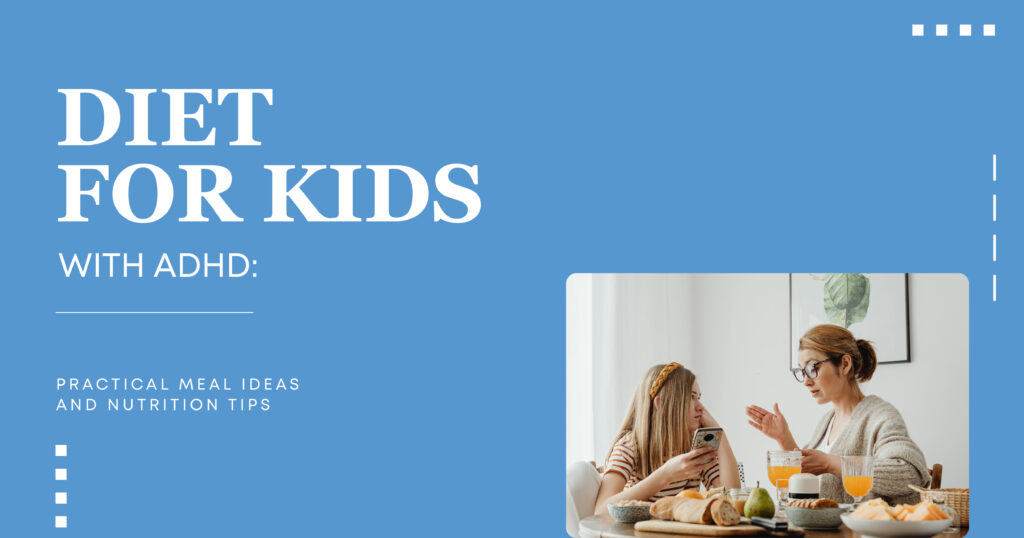
Helping an ADHD child does not simply mean coping with their behavioral tendencies or providing structure, but can, most times, mean reconsidering the patterns that supply the energy, attention, and mood of the child. Food plays a greater role in most families than most people realize. Although diet is not a treatment for ADHD, studies indicate that it may affect attention span, hyperactivity, and emotional control. This is the reason why a significant number of parents research the topic of kids’ diets with ADHD and seek to find effective methods of preparing meals that can benefit the child.
This guide examines the science behind ADHD-friendly nutrition and offers straightforward, everyday strategies that can be easily adopted by families.
Understanding Diets for Kids with ADHD and Why Nutrition Matters
The nutrients that are usually linked with better behavioral stability and attention in children with ADHD are presented in a table below:
| Nutrient / Food Type | Potential Benefit | Research Insight |
| Omega-3 fatty acids | Improves attention and mood | Associated with a 26% increase in concentration in enriched children. |
| High-protein foods | Stabilize blood sugar and energy | Associated with reduced hyperactivity episodes |
| Magnesium | Supports calmness and sleep | Deficiency is exhibited among up to 48% of children with ADHD. |
| Zinc | Helps regulate dopamine | Low zinc linked to worsened impulsivity |
| Low-sugar diets | Reduce overstimulation | Excess sugar linked to increased activity spikes |
Exploring the Elimination Diet for ADHD and Common Trigger Foods
Some children are sensitive to some ingredients that disrupt their attention or irritate them. Treatment of ADHD is an elimination diet whereby the avoidance of certain foods is done, followed by a reintroduction of the food at the same time to identify the trigger. It is critical to state that the research shows that as many as 60% of children with ADHD are capable of responding to at least one food trigger, so one can proceed to analyze the most commonly avoided foods.
Examples of the foods that are normally avoided in an elimination diet include:
- Synthetic colors, preservatives.
- Gluten and casein
- Soy products
- High-sugar foods
- Typically, allergens include corn, eggs, and peanuts.
- Artificial sweeteners
- Fast foods and processed meats.

Artificial Food Dyes and Behavioral Responses in Children with ADHD
Food dyes (Red 40, Yellow 5, and Blue 1) could make a difference in the behavior of sensitive children. Before enumerating dye-heavy items, it is worth mentioning that in a study carried out by the Journal of Pediatrics, it was found that out of the total number of children, 8 percent had a severe response to artificial colors, but it is much higher in cases of ADHD.
Artificial dyes are generally present in the following foods:
- Gummies, fruit snacks, and candy.
- Colored cereals
- Sodas and sports drinks
- Packaged pastries
- Artificially-flavored desserts and ice pops.
- Shelf-stable mac and cheese
- Milkshake or slushies in fast-food restaurants.
Sugar Intake Management and Reducing Hyperactivity Through Diet
Sugar does not cause ADHD, but it has the ability to increase hyperactivity and mood swings. The second point to consider before looking into sugar management strategies is that blood sugar spikes influence dopamine regulation, which is critical in children who already have issues with attention.
The key sugar-reduction measures are:
- Serving fruit rather than sweet desserts.
- Eating yogurts and cereals with no sugar.
- Restricting sodas and flavoured beverages.
- Combining carbohydrates and protein to retard absorption.
- Substituting sugary foods with nuts or whole-grain foods.
Protein-Rich Meals and Steady Energy Support for Kids with ADHD
Protein helps in the management of blood sugar, and it helps in the formation of dopamine, which has a direct effect on focus. It is also advantageous to add that children with ADHD will respond well to a protein-based breakfast even prior to contamination of the concepts of protein-based food. Research also concluded that children who took a high amount of protein in the morning enhanced their concentration by 20 percent.
Protein-rich sources helpful to the concentration and restful energy are:
- Eggs, omelets, and breakfast burritos
- Chicken, turkey, and lean beef
- Greek yogurt with nuts
- Cheese sticks or low-sugar cottage cheese
- Beans, lentils, and chickpeas
- Toast whole-grain toast using peanut butter or almond butter
Balanced Meal Planning for Families Managing ADHD Symptoms
Feeding ADHD kids does not need anyone to be perfect, but just to think sensibly. It is always good to know that children with ADHD are usually attracted to predictable patterns before going through some of the main meal-planning strategies. Normal eating reduces the level of blood sugar and enhances daily attention.
Some easy strategies of meal planning to satisfy ADHD individuals include:
- Development of weekly menus as a way of decreasing decision fatigue.
- Combining proteins, healthy fats, and complex carbs.
- Making grab-and-go items such as nuts, cut fruit, and hummus.
- Storing dye-free and low-sugar snacks at eye level.
- Daily intake of one source of omega-3.
Get Personalized ADHD-Friendly Nutrition Support for Your Child at Hillside Horizon for Teens
The nutritional needs are not similar for every child, and they become more special when ADHD is incorporated. Having observed that there are some types of food that increase irritability, hyperactivity, or attention deficits, you are not alone. At Hillside Horizon for Teens, families are offered customized assistance, evidence-based counseling, and real-life solutions based on the behavior of their child and their health.
Our team will assist you in making informed choices that are confident in making decisions, whether you are trying to find new meal plans, an elimination diet, or long-term strategies.

FAQs
What are the benefits of an elimination diet for ADHD in reducing artificial food dyes?
The elimination diet will help determine whether the Red 40 or Yellow 5 dyes provoke hyperactivity or mood alterations. Most of the families report a more peaceful behavior of their children and a reduction in emotional fluctuations when the dyes are eliminated and substituted with whole-food options.
How do omega-3 fatty acids contribute to better attention in kids with ADHD?
Omega-3s aid in brain development, improve brain-to-brain communication, and emotional regulation. Research demonstrates that they have the potential to raise attention and decrease impulsivity, particularly among children whose baseline is low.
What are effective sugar intake management strategies to ensure steady energy levels for children with ADHD?
Protein combined with carbs, using whole fruits rather than sweetened snack foods, and decreasing sweetened beverages are some of the ways to control blood sugar. These plans lessen hyperactivity bursts and aid more even-handedness of energy throughout the day.
How can magnesium and zinc supplements support children with ADHD in their daily diet?
Both of the minerals assist in the regulation of neurotransmitters that are associated with focus and mood stability. Probably, to enhance calmness, attention, and the quality of sleep, it is better to increase the amount of food consumed or add supplements (when it is recommended by a clinician).
What gluten and casein-free meal ideas can help maintain nutritional balance for kids with ADHD?
Foods such as quinoa bowls, turkey meatballs, gluten-free pasta, dairy-free smoothies, and vegetable-based rice meals provide balanced meals. These alternatives are in favor of sensitive children who have sensitive changes in their behavior or digestive systems.