
01
In Sessions
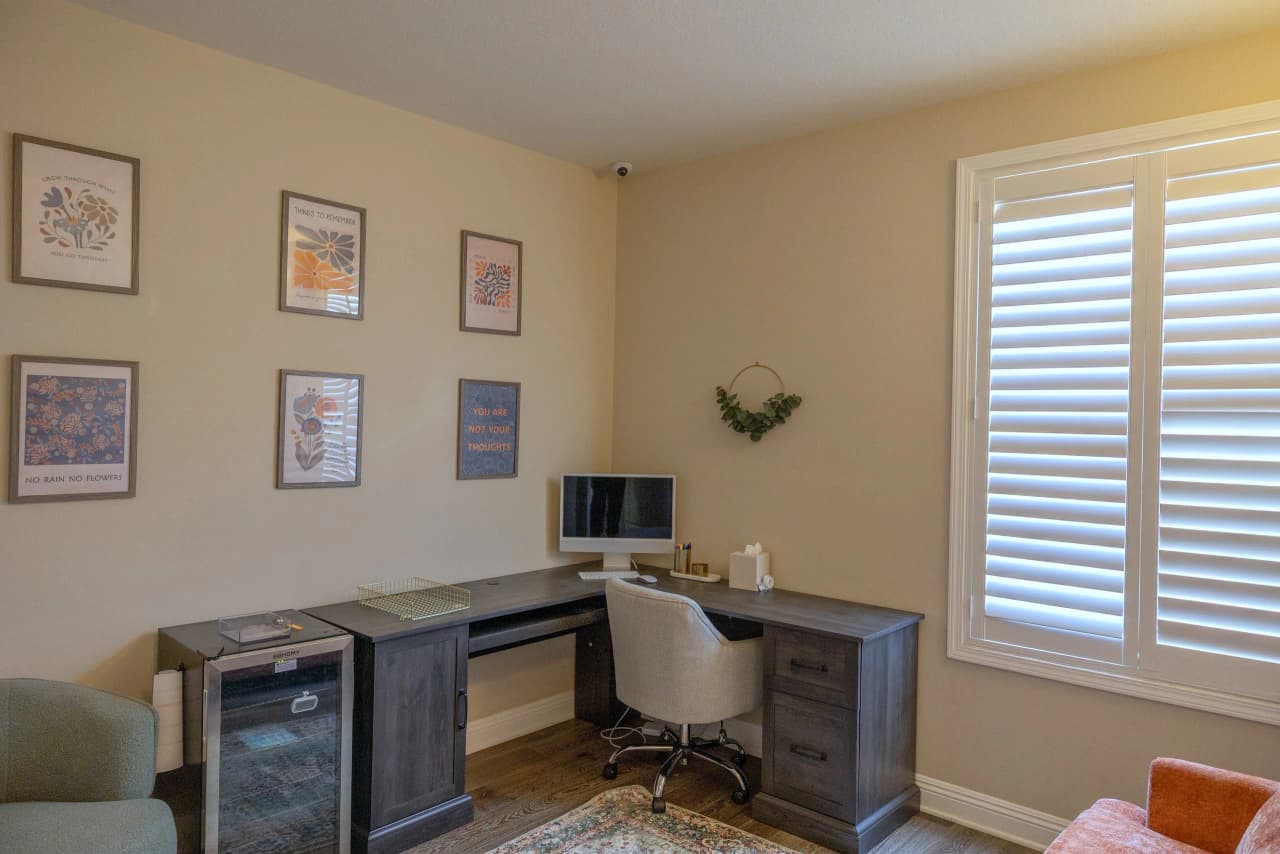
A licensed clinician meets with your teen most days, with enough time to talk about what feels hard beyond what they think you want to hear. The approach inside the hour is chosen for what your teen needs this week.
Private therapy is one hour, and the rest of the day can support that work. Your teen sees the same primary therapist most days, and that therapist shares the plan with our staff so the work carries into dinner.
Clinically reviewed by Alejandro Alva, M.D., Medical Director.


What this is
Individual therapy here means a primary clinician, a private room, and a plan our staff already know. It is not fifty minutes once a week. The session is a place for what your teen may not feel ready to say in group, and the rest of the day is where they practice it.
What these sessions are for
Many teens find it easier to be honest behind a closed door, without worrying about protecting a parent or impressing a friend.
Goals can change as the weeks change. Your teen's plan follows what they need now rather than a group curriculum with their name attached.
What your teen names at ten in the morning can be used at dinner, so the therapist and the house staff coordinate after each session.
Conflict in the therapy relationship is often part of the work, and it is not a reason to move your teen to a new therapist.
You receive the treatment picture and any safety concerns, not a transcript. Safety is the one thing that crosses that line.
What your teen finds hard to say to you directly can often be worked out here first, then brought to a family session when they feel ready.
How it works
A private room for honest conversation, a team that already knows the focus, and staff who support it after lunch.
01
A licensed clinician meets with your teen most days, with enough time to talk about what feels hard beyond what they think you want to hear. The approach inside the hour is chosen for what your teen needs this week.

02
The therapist briefs family clinicians, the school, and the house staff, so the plan is still in place after lunch. Treatment is meant to continue after the session ends.
03
Our staff know what your teen is working on that week and coach it between activities. The relationship is the heart of the method, and the house is where it gets practiced.
Our approach
The same clinician holds the thread across the whole stay, and what happens inside the hour is chosen for your teen.
Seeing a primary therapist several times a week means your teen's history does not reset every Monday with someone new.
CBT, DBT skills, trauma work, or motivational interviewing can all be part of these sessions. The room stays the same, and the approach changes with what your teen needs.
You hear the plan and any safety concerns, and you do not hear the private details. Safety is the one exception.
Each session produces something the evening staff can reinforce. The door closes for privacy, and the work still carries into the rest of the day.
The therapist and the prescriber talk directly when medication is part of the plan. Medication sits alongside therapy and does not replace it.
Your part
A private room is how an honest conversation can start, and staying informed helps your family feel part of the plan. You hear about the plan, the risks, and the next step, rather than a play-by-play.
Tell me everything they said in there.
You will know the goals, any safety concerns, and the focus for the week. You will not receive a transcript, because your teen's trust in that room needs to be real.
The individual hour should fix the house.
What can't be said in the private hour often belongs in a family session. Family sessions are yours to attend, and your teen's individual hour stays theirs.
We'll figure out the weekend when they get back.
The clinician writes the first weekend plan with you before your teen leaves, helping home feel less like the first test of anything.
Length of stay
30
days in residence, by progress
Most stays run one to three months, timed to the work rather than a package.
90
Your teen meets with the same clinician most days throughout the stay, and the relationship builds over thirty to ninety days. The rest of the day follows the same plan, and our staff already know the focus. Aftercare includes a warm handoff to the next therapist.
When to call
If a weekly outpatient hour isn't enough, we're here to help. Aaron Earnest and the admissions team will be upfront about whether daily sessions are too much or not enough for your teen. CBT and DBT are both part of these sessions, depending on what the work needs.
Before you call
FAQ
Answers to what parents often ask about individual therapy in our program. If your question is not here, admissions can talk it through with you.
Your teen works with one primary therapist in a private room, with a plan our staff already know. The session is a place for what your teen may not feel ready to say in group. The rest of the day is where they practice it.
Your teen sees the same primary therapist most days, several times a week, throughout the stay. Their history does not reset every Monday with someone new, and the relationship builds over 30 to 90 days.
You will know the goals, any safety concerns, and the focus for the week. You will not receive a transcript, because your teen's trust in that room needs to be real. Safety is the one exception, and it is the one thing that crosses that line.
Aaron Earnest and the admissions team will be upfront about whether daily sessions are too much or not enough for your teen. If a weekly outpatient hour isn't enough, we're here to help.
Psychiatry becomes part of the plan when the team recommends it. When medication is part of the plan, the therapist and the prescriber talk directly. Medication sits alongside your teen's therapy and does not replace it.