
Getting enough sleep during the teenage years is critical for health, mood, and academic performance. Yet most teens fall far short of what their developing brain and body actually require. At Hillside Horizon for Teens, we see firsthand how sleep duration impacts everything from therapy progress to emotional stability.
Quick Answer: Exactly How Many Hours of Sleep Teens Need
Most teenagers between ages 13 and 18 need 8 to 10 hours of sleep per night to function at their best. According to the National Sleep Foundation and sleep research from leading pediatric experts, the ideal often falls closer to 9 hours nightly for most adolescents.
Younger teens (ages 13–15) typically need the higher end of this range—9 to 10 hours—due to intensified growth demands. Older teens (ages 16–18) still require at least 8 hours, which is far more than the 6 to 7 hours many teenagers actually get on school nights. For comparison, adults need only 7 to 9 hours, meaning teens genuinely require more rest than grown-ups.
Recommended sleep time by age group:
- Ages 13–15: 9–10 hours per night
- Ages 16–18: 8–10 hours per night
- Adults (18+): 7–9 hours per night
At Hillside Horizon for Teens, we routinely observe that once teens consistently reach 8 to 10 hours of quality sleep, their mood stability, focus during therapy, and overall treatment progress improve significantly.
Why Teens Need More Sleep Than Kids and Adults
Adolescence represents a peak period of brain and body development. The teen brain is essentially “under construction,” requiring extra rest to complete critical wiring and pruning processes.
- Brain development: The prefrontal cortex (responsible for planning, impulse control, and decision-making) is still maturing and depends on adequate sleep for synaptic pruning and consolidation.
- Physical growth: Growth hormone releases predominantly during deep sleep, supporting height increases, muscle development, and puberty-related changes.
- Circadian rhythm shift: During puberty, the body clock naturally delays melatonin release by 2 to 3 hours, pushing biological bedtime closer to 11 p.m. or midnight—creating conflict with early school start times.
- Cognitive benefits: Attention, memory consolidation, and problem-solving all depend on getting the sleep they need.
- Emotional protection: Sufficient sleep lowers the risk of depression, anxiety, and irritability—something we observe daily in our therapeutic work with teens.
How Much Sleep Teens Are Actually Getting
Despite needing 8 to 10 hours, most teens fall significantly short. CDC data and National Sleep Foundation polls confirm that fewer than 2 out of 10 teenagers achieve recommended hours on both school days and weekends.
- By age 14, only about 23% of teens sleep 8 or more hours; this drops to 19% by age 16.
- Most high schools start before 8 a.m., forcing wake times around 6 to 7 a.m.
- Many teenagers average only 6 to 7.5 hours on school nights during the school week.
- Weekend “catch-up” sleep often involves sleeping 2+ hours later, which worsens circadian misalignment.
- Older teens, athletes, and those with part-time jobs or extracurricular activities tend to sleep even less.
- Mental health challenges like anxiety can fragment sleep, reducing quality even when total hours seem adequate.
What Happens When Teens Don’t Get Enough Sleep
Chronic sleep deprivation in teens goes far beyond feeling tired the next morning. Sleep deprivation affects nearly every area of functioning.
- Academic struggles: Insufficient sleep disrupts concentration, working memory, and test performance. Homework completion suffers, and reaction times slow.
- Mood and mental health: Sleep-deprived teens experience increased irritability, impulsivity, and emotional outbursts. Depression risk increases 2 to 3 times with chronic sleep debt.
- Mistaken identity: These mood shifts are often dismissed as “normal teen attitude” rather than recognized as sleep-driven.
- Safety risks: Drowsy driving triples crash odds for novice teen drivers, especially in the morning. Sports injury rates also rise.
- Risky behaviors: Poor judgment from less sleep leads to higher risk of substance experimentation and poor decision-making.
- Physical health: Links exist to weight gain (20–30% higher BMI risk), elevated blood pressure, and weakened immune function.
- In treatment settings: At Hillside Horizon for Teens, improving sleep often reduces crisis behaviors, self-harm urges, and emotional volatility.
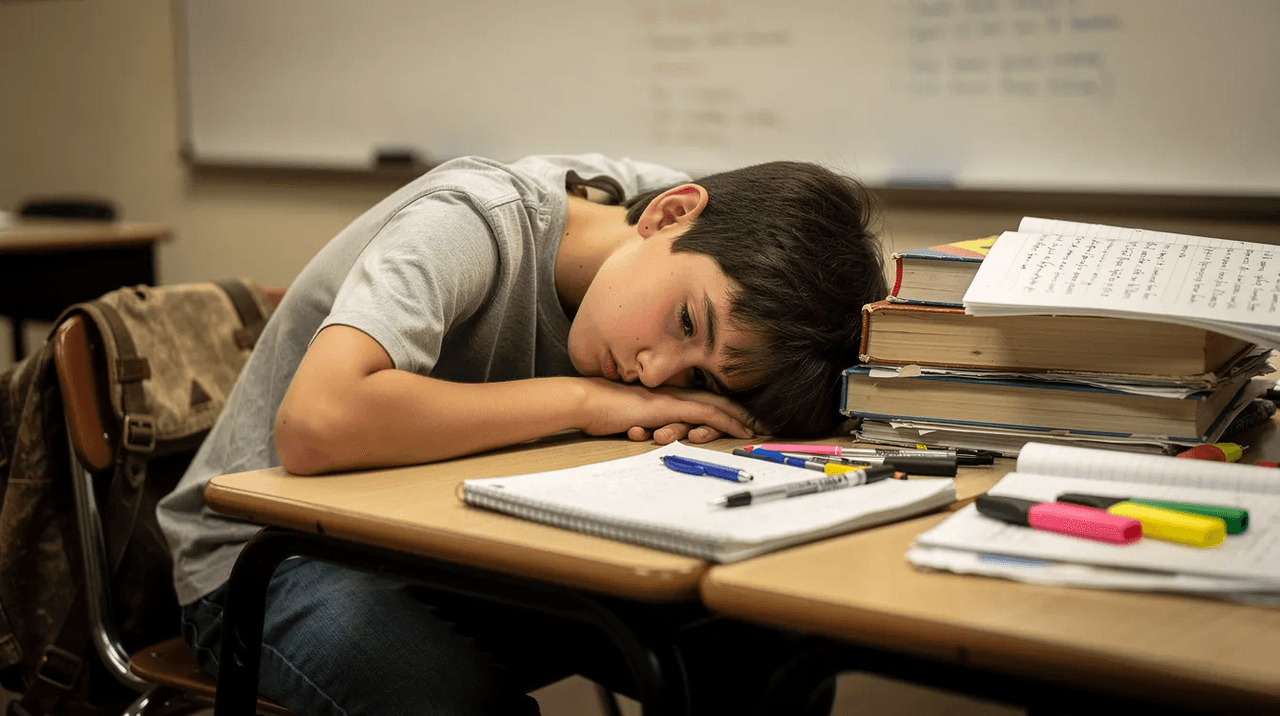
Why It’s So Hard for Teens to Get Enough Sleep
The problem isn’t laziness—it’s a collision of biology, school schedules, technology, and mental health pressures.
Most adolescents genuinely cannot fall asleep before 11 p.m. due to delayed melatonin release during puberty. Even with good sleep habits, their body’s production of sleep hormones doesn’t kick in until late night.
- Early school times: Many high schools start before 8 a.m., with commutes adding 30–60 minutes. This vicious cycle limits sleep windows to 6–7 hours even with early bedtimes.
- Homework and activities: Heavy homework loads plus extracurricular activities and part-time jobs push bedtime past midnight.
- Electronic devices and blue light: Late bedtimes often involve phone scrolling, gaming, or streaming. Blue light suppresses melatonin by 23–50%, delaying sleep onset.
- Social pressure: Group chats, fear of missing out, and pressure to be constantly reachable keep teens alert.
- Stress and mental health: Anxiety, depression, and trauma cause nighttime rumination, making it harder to fall asleep.
- Caffeine and irregular routines: Afternoon nap habits, energy drinks, and weekend sleeping in further disrupt the sleep schedule.
How Parents and Teens Can Build Healthier Sleep Habits
Building better sleep requires collaboration, not power struggles. Parents and teens working together toward realistic goals see the best results.
- Set a gradual target: Move bedtime earlier in 15–20 minute steps every few nights until reaching 8–10 hours.
- Anchor wake times: Keep wake time consistent all week—no more than 1–2 hours difference on weekends.
- Create a wind-down routine: Spend 30–60 minutes before bed on calming activities like showering, stretching, reading, or journaling.
- Reduce screen exposure: Devices off 30–60 minutes before sleep. Use night mode and charge phones outside the bedroom.
- Optimize daytime habits: Regular physical activity (not right before bed), caffeine cutoff by early afternoon, and dinner not too late at night.
- Skip late afternoon nap sessions: If napping is needed, cap it at 20–30 minutes before 4 p.m.
- Address nighttime worries: At Hillside Horizon for Teens, we teach coping skills and CBT strategies that reduce bedtime anxiety.

Creating a Teen-Friendly Sleep Environment
The bedroom setup either signals the brain to rest or keeps it in alert mode. Small changes lead to better sleep quality.
- Darkness: Make the room as dark as possible using blackout curtains or an eye mask. Even dim light reduces melatonin production.
- Soft lighting: Use warm-toned lamps in the evening instead of bright overhead lights.
- Cool temperature: A slightly cool room (cool enough for a light blanket) is ideal for sleep initiation.
- White noise: Fans or white noise machines mask household sounds without creating new sleep associations.
- Bed purpose: Keep the bed for sleep only—not for homework, gaming, or scrolling.
- Tech placement: Designate a charging station outside the bedroom to reduce temptation.
At Hillside Horizon for Teens, we intentionally structure rooms and nighttime routines to support this kind of sleep-friendly environment.
When to Worry About Sleep Problems and How Hillside Horizon for Teens Can Help
Many families struggle with teen sleep, and that’s normal. But certain signs indicate something more than a simple schedule issue needs attention.
Warning signs to watch for:
- Taking more than 30–45 minutes to fall asleep most nights
- Loud snoring, gasping, or frequent awakenings
- Sleeping far more than 10–11 hours yet still feeling exhausted
- Persistent sadness, anxiety, or self-harm thoughts alongside sleep problems
- Sudden grade drops or major personality changes
If your child shows these patterns, talk with their pediatrician to rule out sleep disorders or underlying medical and mental health concerns. Professional support—including therapy and cognitive behavioral strategies for insomnia—can significantly improve both sleep and overall functioning.
At Hillside Horizon for Teens, we integrate sleep assessment and habit coaching into treatment plans for teens facing depression, anxiety, trauma, and other challenges. Improving sleep is one of the most powerful, realistic steps families can take to support a teen’s health and resilience.
Key Takeaways for Families
- Teens need 8–10 hours of sleep nightly; most teenagers get far less.
- Sleep strongly affects mood, academic performance, safety, and mental health.
- Biology, school schedules, and technology all work against teen sleep—it’s not laziness.
- Good sleep habits and a sleep-friendly bedroom environment make a real difference.
- Seek professional help when sleep problems persist or accompany emotional struggles.
- If your teen’s sleep challenges are tied to broader emotional or behavioral issues, structured support like the programs at Hillside Horizon for Teens can help restore both rest and wellbeing.
Clinically reviewed by Alejandro Alva, M.D., Medical Director.